
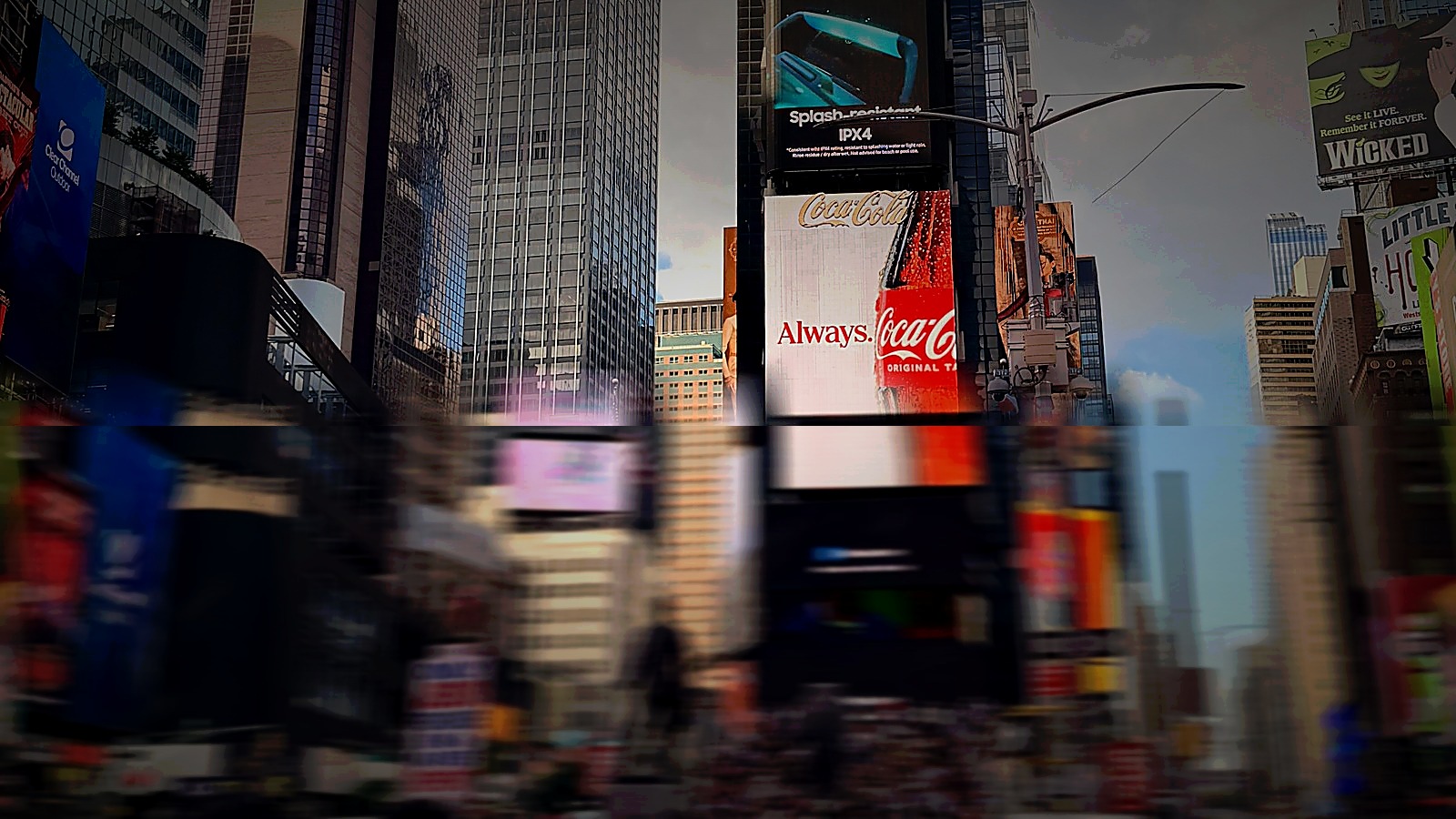
It feels like my body has been stuck in survival mode for years. Like there is a persistent threat looming above. Part of it, I’m sure, is the 24-hour news cycle, American and global politics, social media feeds ratcheting up FOMO. There’s the reality of AI displacement and its related doom cycles. But I can also attribute a large portion of this ever-present dread to modern corporate life.
We spend a lot of time working. A lot. For most corporate jobs, maybe more specifically for knowledge workers, there is the idea of the standard 8 or 9 hour day. The 9-5. The hours we’re meant to be on the clock. But as most denizens of Corporate America can tell you, the 9-5 is an illusion. There are the days we get in early to prepare for a meeting. The nights we stay late to meet a deadline. There’s the weekend catch up or the nighttime messaging with your boss to prove we’re available, leaned in, and ready for that next promotion.
Then there are the mental tolls, like hidden fees on our time, that often get overlooked. It is time spent on the Sunday scaries, fighting imposter syndrome, lying in bed at 3 am wrestling with endless rumination: replayed conversations, running imaginary scenarios, and mulling over the question “is it all worth it?” in exchange for nice salaries, health benefits, and a sense of identity.
Work consumes way more than forty hours a week, so it is no shock that many of us build our identities around who it tells us we are. Pride in the company we work for, the title we’ve attained, the place in society our salary affords. That isn’t a bad thing in itself. It helps us position ourselves, gives us a system to identify ourselves, a shorthand to communicate where we fit. A place to belong. But what happens when the scaffolding of our identity is dismantled—when we leave a job, when we get laid off, when a position just doesn’t work out? What happens when our role is replaced by AI and a whole category of work disappears? Not only do we have to contend with a financial disruption but an existential one. Who are we without that job that consumed so much of our day, the company that signaled so much of who we believe ourselves to be, and the status that shaped how we look at the world?
These questions are very familiar to me. Over the last couple years I’ve been through several changes that have caused me to take a deep look at how it is I define myself. I moved from Chicago to New York for work. I graduated from my MFA program after 4 years of consistent class work. I navigated my way through reorgs, adapted to management changes, and survived round after round of layoffs. I left my longterm role at a company that I was very proud to be a part of and moved into a different discipline and a new role at another organization only to have the pieces not fit together. It felt like quicksand and in many ways I was relieved when we parted ways. But it hurt nonetheless.
All of these shifts and pivots left me feeling drained, unsure, questioning. But I also started to realize that my mind and body had been strained for years. The sleepless nights, the 12 hour work days, the fear of layoffs had kept me in a constant fear. I talk a lot about our lizard brains, the primal instincts that are meant to keep us safe but that are unfamiliar with the complexities of modern life. My lizard brain had my heart pounding. I fought very hard to be in control of my own fate. In the end, I’d clung so hard to my corporate identity that I lost myself in the process. And no matter how hard I tried to worry away an outcome, I think I might have hastened its arrival. And there it was. Now what?
Grief. I had to take a moment to grieve. Look at it up close and pay attention to what was changing in my mind and body. Of course, my instinct was to force resilience. To take it all in stride. It’s just a job after all. Chin up and get to work finding a new and better one. I could just replace the job stress with job search stress. Fill my time with network outreach, I could endlessly scroll LinkedIn. I could lose sleep worrying about what went wrong. But I fought that instinct, at least for a little bit. I allowed myself time to grieve. A day, a week, two—I decided it was a bigger risk if I didn’t take a moment to examine what it was I had lost than it would be to jump towards the next thing. Because if I didn’t recognize what had made me feel so drained then I would just repeat the pattern. I would just kick the can down the road.
I’ve come to understand we lose much more than a paycheck and health benefits when we lose a job. Income, of course, is a huge stressor and rightfully so, but there is so much more tied up in work. We lose structure: the meetings, the deadlines, the QBRs. We lose the dopamine hits: the new email, the slack messages, the atta boy/girl from a leader. We lose our bearing: the job title, the company, our place in the org chart. Without the structure, the dopamine, and the bearing, it is easy to get lost. Unmoored. At sea.
It feels like we are alone on a piece of wreckage, feeling every swell of the sea, no land in sight. I felt that and I allowed myself to experience it. But it was also in this moment that I discovered an opportunity to find my compass and orient myself to a better path forward. What may have been stripped away by the loss, wasn’t my actual identity. It was a context. A frame. The title, the company, the place in the org chart—even the salary, was never the source of what I brought to the work. All those things were a narrative I believed, but one I can now re-write, I can add a new chapter.
The skill, the experience, the problems I am passionate about solving, those things are within me, not the job. And the same is true for all of us. I can take those elements and decide how I want to apply them, whether that is in my next corporate job or something new altogether. I’m exploring. I’m watching courses on MasterClass; I’m reading literature again; I’m walking new routes. I want to rediscover the essential parts of myself and see what new paths open up before me. Whether that means the next corporate role, something entrepreneurial, or simply a clearer sense of how I want to contribute to the world on my own terms.
“Gliding through on my bike, gliding through/Like new from my recent ego death.” I’ve been listening to Lorde’s album Virgin. The album frequently dives into themes of stripping away some of the stories we tell ourselves about who we are, and the freedom that is exposed when we do so. I’m spending time to reset my nervous system. I’m letting go of the narratives I’ve believed about my worth. I’m trying diligently to be kind to myself and let go of the productivity trap. Let go of dopamine cycles. I’m beginning to understand that I don’t need output at every moment and that rest is not a moral failing. I’m taking time to listen to the world around me and finding quiet in my mind to hear my own inner voice.
I suspect that these questions of identity will continue to expand as advancements in AI change the world around us and we seek to redefine our place within this new world. I feel an urgency to understand who I am outside of a title or a company that wasn’t there before. AI has turned up the pressure in ways that feel bigger than a single role or company. Pushing me to find new ways to anchor the myself with renewed purpose.
I’m reminded of the blank space between chapters in a book. It is a moment to breathe and contemplate what just ended before carrying on with the story. That blank space is a signal to pause, process, and proceed at will. But it is the reader’s choice how long they take in between.
Lorde’s album, has a line in the opener, “Hammer” where she sings “I’m ready to feel like I don’t have the answers.” I don’t have the answers, but I’m ready to ask the questions.