
On losing the joy in work, and giving yourself permission to tinker your way back to it.
Last week was rough. My rhythm was off. On Wednesday, I was particularly out of sorts. I made it to the gym without my water bottle. I completed five of the intended one hundred floors on the StairMaster. I pivoted to the treadmill for a run, which quickly became a walk, and then a throwing in of the towel. I returned home and sat at my computer, stuck in a maze of open tabs and idling apps—pulled in a dozen directions. Priority paralysis set in. My fingers locked up. I simply couldn’t find an opening into my day. Every road I charged down was fraught with friction. Every task, herculean. I closed my laptop and went for a walk. Brute force wasn’t going to get me beyond the blockade. The only way to salvage my day would be to let it go. So I sat in Bryant Park and let the day recede from me. I stopped trying to wrangle it into productivity and accepted the L.
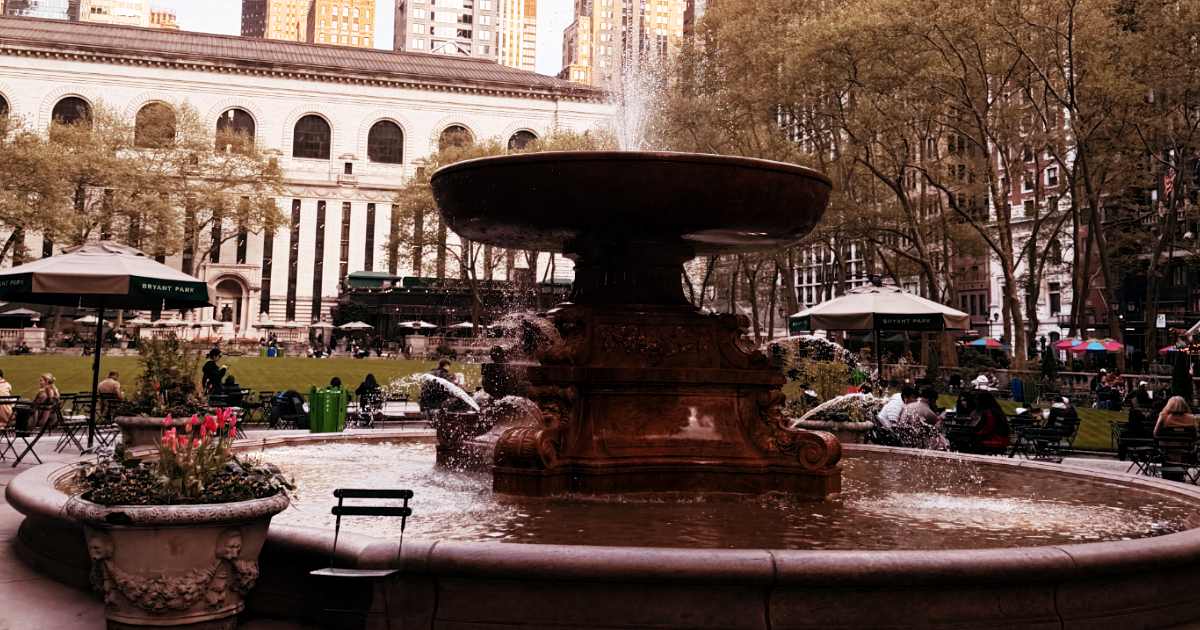
I watched tourists point at the marvels and gems that dot the park. Men in suits paced the manicured paths shouting into their phones. A woman sat at a table with her laptop, that familiar Brady Bunch grid of faces staring blankly back at her. I moved by the fountain where a soft cool mist reached me every time a gust of wind blew through. My brain tugged at my attention: You should be working. You should be getting shit done. Guilt tightened my shoulders. My brow furrowed, my palms sweating, a litany of to-dos repeating: file LLC papers, get my social media engine revved up, make pricing and packaging decisions, work on my website, write a blog, revise the story. The list spiraled into an insurmountable mountain of work. Wait. This is supposed to be fun. Right?
Fun? I know, I know—fun is a weird word in relation to work. When I say fun, I mean it as a proxy for engagement, for excitement, for energy. It doesn’t have to be easy. It doesn’t have to be without its challenges—in fact, challenges tend to ratchet up the fun. Give me something to solve and a good group to solve it with and I can’t think of anything more fun. Camaraderie, accomplishment: those things make work worthwhile, and all that adds up to the word I think I am really searching for: Joy.
That Wednesday, no task, no to-do, sparked joy. Usually I can look at an item from a different angle, contextualize it and get it done. But it all felt so joyless.
I thought back to moments when I felt that spark. I have always been a “participator.” In high school I was in marching band, speech team, yearbook, theater—the nerd Olympics as I called it.
I remember the wool against my skin, the music surrounding me, the audience in the stands watching with rapt attention as the percussion throbbed and we marched to position, pausing for a moment in formation on the field. 175 bodies precise and in time. Joy.
I can still feel the electricity in my body during the curtain call of my first play. The lights going down after the final line, the pause, then the applause. All of us running backstage, elated. Those moments were the culmination of months of practice. They were supercharged by communion. Joy.
Once in the workforce I continued to be a participator. I joined Business Resource Groups, went to happy hours, built that extra sense of community. It worked. I felt integrated into a larger team and felt that the work mattered. As I progressed in my career I sought to build the same type of connection in my teams. There were several times in my career where I felt true joy. I felt it in product launches that required everyone to pull together; I felt it watching someone on my team deliver something they didn’t believe they could. I once teared up when we finally got a free software trial to provision seamlessly from a new registration form. I felt joy when we finally launched it to the site and saw dozens of registrations come in on the first day. The fun of watching a product trial response turn into a lead, then an opportunity, and finally a win. Pride, excitement, energy—we were invested in our company, our product, and each other. The work felt remarkably human.
Over the last several years, I’ve felt the joy, and to some extent, the humanity, leak out of work.
It didn’t happen all at once. It was more like a tire going flat than a blowout. Covid sent us home. Then back-to-office policies were unclear, and to many, felt like a betrayal. Soon came round after round of highly publicized layoffs. Political polarization didn’t help matters. Then AI began to dominate the conversation. The pressure to adopt AI and automate more and more of our work meant we were spending more time collaborating with ChatGPT and Claude than with each other. AI increased the speed of work. Cycles that once took days collapsed into hours and I often found myself moving through more output without feeling more accomplishment. Those moments of camaraderie, community, and completion grew fewer and further apart.
I don’t want to paint AI as a villain. It isn’t. It is no more a villain than any other tool. However, it has changed how we work and as we adapt and figure it out, it has put a strain on the system. Even in my organization of one, I feel the strain. I use AI every day. I spend hours chatting across different AI tools, creating agents, trying to bridge the gaps of being a one-man band. Some days, I look back and wonder what I really accomplished. What needle did I move? What progress did I actually make? Some days it feels productive; others, it feels like an exercise in futility. Vapor. No matter how conversational AI becomes, it doesn’t give me the same spark of joy I experience when working with other humans.
So how am I going to bring the joy back into my work? Where will I find the fun? My answer might lie in what is often cast as the opposite of work: play.
That cliché, love what you do and you’ll never work a day in your life? I think that is true-ish, but doesn’t account for days like last Wednesday. No amount of passion or alignment or love for the work can prevent those days. Sure, it gives me a bit more of a fire to push through, but maybe I need to give myself permission to play.
Play is another funny thing to associate with work. When I talk about play, I’m talking about freedom. Opening up to possibility without a strict need for output. It means lowering the stakes. In band, we made silly sounds on our instruments and tried out ridiculous formations. So much of acting is playing. Finding the characters, finding the beats through play. I’ve always had fun tinkering with things. Doodling. Hands-on learning is often punctuated with play. In the office, nothing was more fun to me than a whiteboarding session. Ideas flowing freely. Tangents. Jokes. Something of value always came out of it, but we never got there in a straight line.
So I am giving myself permission to play. To tinker. To draw on the whiteboard with no agenda. I’m going to jot down the ridiculous line and see where it leads. I’m going to write the silly prompt and see how far sideways we can go. I’m going to experiment with different tools, media, formats. Another Wednesday and I’m back in Bryant Park. Men in suits still pace. Tourists still marvel. Still a to-do list. Most of the same items are there. Some have progressed, some have even been checked off. But there is a new entry: Play.
Comments
One response to “Permission to Play”
Great perspective. Important insight. Thank you.